The Basilica is dedicated to Bishop Petronius (5th century), patron saint of Bologna. Its construction was ordered by the city council in 1388.
The Basilica’s initial design was very ambitious: the plan was to transform the original Gothic basilica, featuring transepts and a tiburium, into an immense church with a Latin cross plan, crowned by a dome and flanked by four bell towers. Its final size would have even exceeded that of St Peter’s Basilica in the Vatican.
The project’s completion was hampered by technical and economic difficulties, as well as changing political and spiritual circumstances, and the Basilica remained unfinished.
Construction work on the Basilica spanned over three centuries and was entirely financed with public funds. San Petronio was not intended to be Bologna’s cathedral, but rather a civic, state and municipal temple.
The sundial
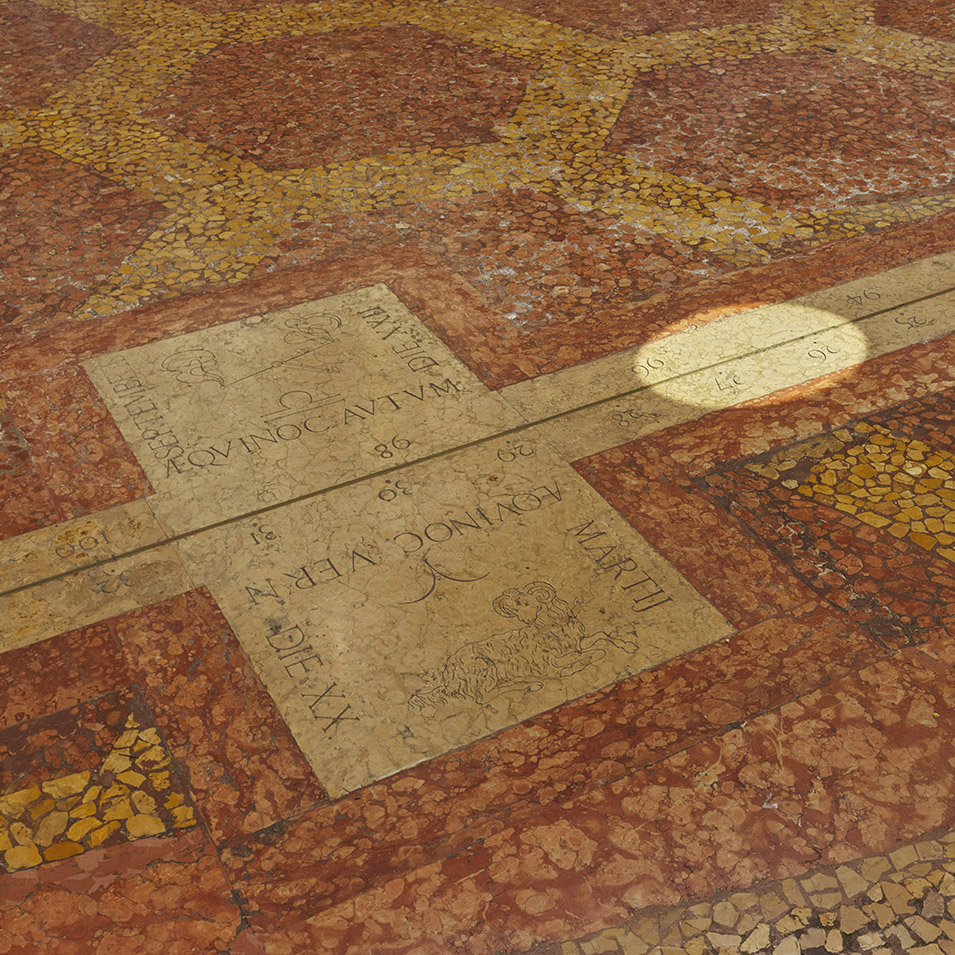
The meridian line that crosses the left aisle of the Basilica of San Petronio at an angle was traced in 1655 by the astronomer Gian Domenico Cassini (1625-1712). The 67-metre line marks the local noon with a high degree of accuracy.
The sundial functions like a camera obscura: the sun’s rays enter a small hole in the centre of the left aisle’s fourth vault and are projected onto the floor about an hour before noon.
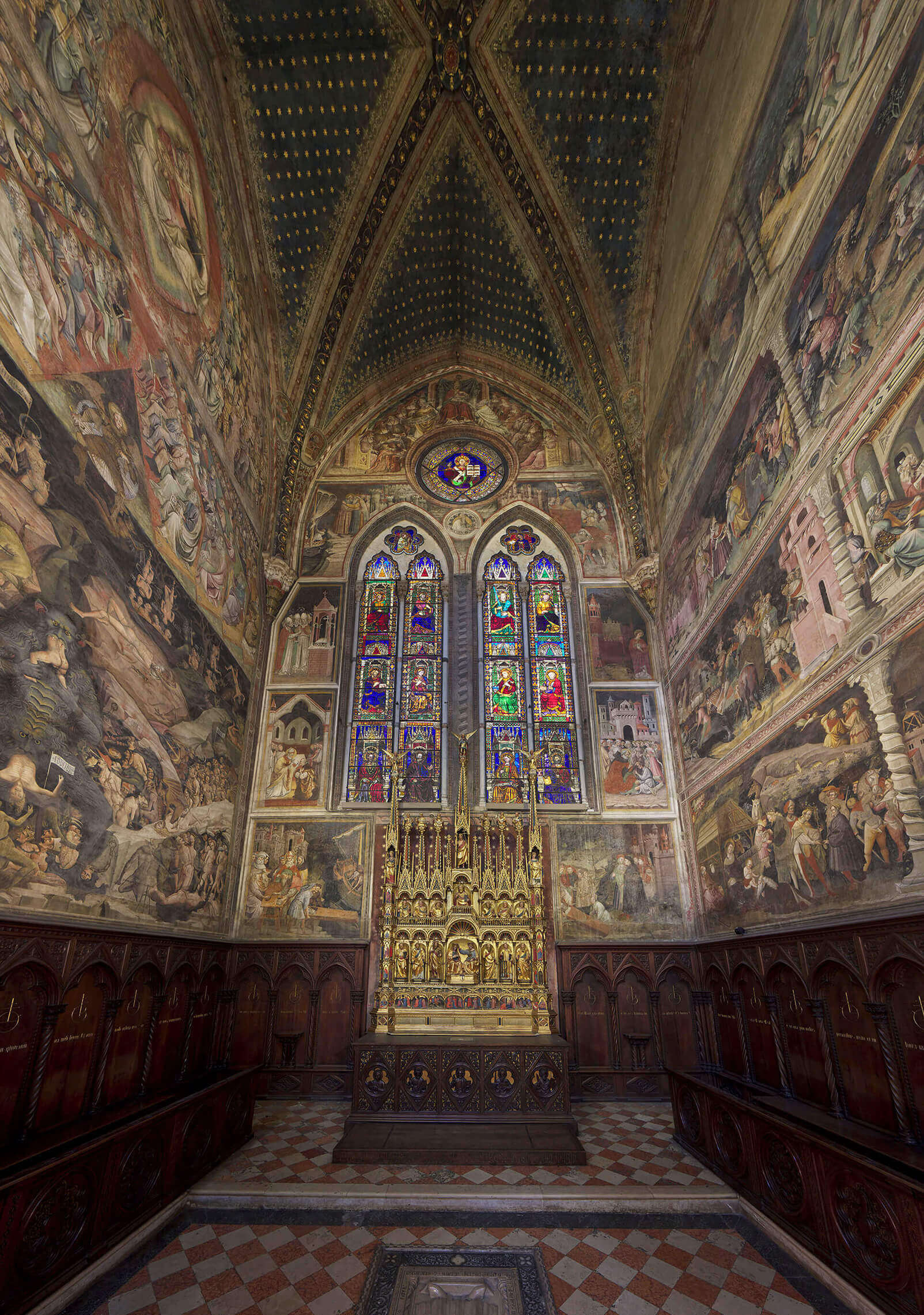
The twenty-two side chapels, square in plan, are all of equal size and are enclosed by beautiful marble transennae or artistic iron gates. Valuable works of art are housed in each.
The chapels are named after the saint to whom they are dedicated and after those who held patronage rights.
The meridian line that crosses the left aisle of the Basilica of San Petronio at an angle was traced in 1655 by the astronomer Gian Domenico Cassini (1625-1712). The 67-metre line marks the local noon with a high degree of accuracy.
The sundial functions like a camera obscura: the sun’s rays enter a small hole in the centre of the left aisle’s fourth vault and are projected onto the floor about an hour before noon.
The twenty-two side chapels, square in plan, are all of equal size and are enclosed by beautiful marble transennae or artistic iron gates. Valuable works of art are housed in each.
The chapels are named after the saint to whom they are dedicated and after those who held patronage rights.